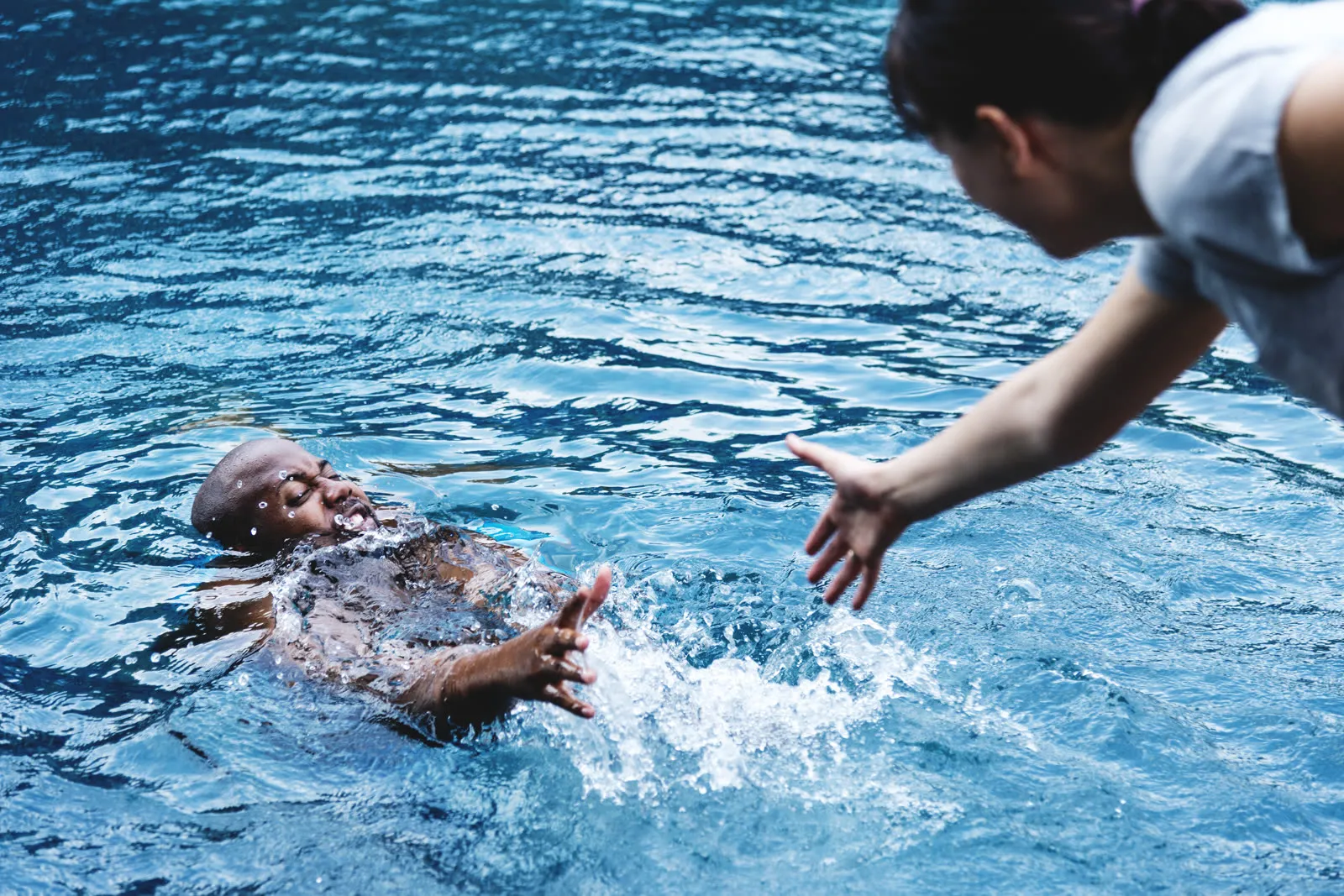
Overboard and drowning incidents on cruise ships
Few events at sea are more heartbreaking than a passenger going overboard or drowning during what was meant to be a vacation. These cases sit at the far end of the spectrum of cruise injuries: a family boards a ship expecting rest and celebration and instead faces the loss or near-loss of someone they love. When a guest disappears from a balcony, slips beneath the surface of a crowded pool, or is swept from an open deck, the questions that follow are urgent and painful. What happened? Could the ship have prevented it? Did anyone notice in time? Was the search fast enough to matter?
Cruise Injury Advocates, the maritime practice of Suro & Rodriguez, PLLC, handles these matters with the seriousness and dignity they deserve. We approach every overboard and drowning claim as a search for the truth of what occurred, conducted with compassion for the family and with the discipline of trial lawyers who prepare each case to be proven. This page explains, in general terms, how these incidents happen, what duties a cruise line owes its passengers, the law that governs a claim, how liability is established, and the practical steps a grieving or frightened family can take. It is educational information, not legal advice, and every situation turns on its own facts.
Modern cruise ships are floating cities. A single vessel may carry several thousand passengers and a crew of a few thousand more, with multiple swimming pools, hot tubs, water slides, splash zones, open promenade decks, and thousands of private balconies stacked a dozen decks above the waterline. That scale creates real risk around water and along the edges of the ship. When a cruise operator does not manage that risk with reasonable care, the consequences can be fatal, and the law provides a path for families to seek accountability and compensation.
How overboard and drowning incidents happen
Overboard and drowning cases are not a single kind of event. They arise in several distinct settings, each with its own hazards and its own evidence. Understanding the category matters, because it shapes what a cruise line should have done differently and what proof will tell the story.
Pool and hot-tub drownings
Lifeguard coverage at cruise ship pools varies from one line to another and from one ship to another. Some operators now station trained lifeguards at their pools and others do not, and for many years the industry treated the absence of lifeguards as normal. A child or an adult can slip below the surface of a busy pool in seconds, and in a crowd of sunbathers and swimmers no one may notice until it is too late. Contributing factors we frequently examine include the lack of any trained safety attendant watching the water, inadequate or missing depth markings, no clear warnings about diving or unsupervised swimming, poor water clarity that hides a submerged swimmer, and pools designed with sudden depth changes. Hot tubs and whirlpool spas carry their own dangers: high water temperature, strong jets, slippery surfaces, and the effect of alcohol all raise the risk that a guest becomes disoriented or loses consciousness. Children are especially vulnerable, and a moment of unsupervised access to a pool or spa can turn catastrophic.
Balcony and railing falls
Private balconies are a selling point of modern cruising, but they place passengers at the outer edge of a very tall structure. Falls happen when railings are too low, when a railing or its supports are defective or poorly maintained, when furniture placed near the rail effectively lowers the barrier, or when a design allows a guest to climb or lean in a way that a safer configuration would prevent. Deck railings on open promenades and upper decks raise similar concerns. A railing that is loose, corroded, or below the height the law requires is a hazard the cruise line is responsible for identifying and fixing. We look closely at the exact geometry of the area where a fall occurred, because a few inches of railing height or a misplaced chair can be the difference between a near miss and a tragedy.
Intoxication and over-service of alcohol
Alcohol is sold aggressively on cruise ships, often through drink packages that encourage heavy and continuous consumption. When bar staff continue serving a guest who is visibly intoxicated, the ship contributes to the impaired judgment and unsteadiness that lead to falls from balconies and decks and to drownings in pools and spas. Over-service is a recurring theme in overboard cases. A passenger who has been served far past the point of visible intoxication is far more likely to climb a railing, misjudge an edge, or enter the water when they cannot safely do so. Bar service records, drink-package data, and crew observations often reveal how much a guest was served and whether staff should have stopped.
Man-overboard events
A man-overboard event is the moment a person leaves the ship and enters the sea, whether from a fall, a medical event, intoxication, or another cause. Survival depends almost entirely on speed. Cold water, wave action, the ship's own wake, and the sheer difficulty of spotting a single person in open ocean mean that every minute of delay in detecting the event and launching a search dramatically reduces the chance of rescue. In many of the most painful cases, the ship did not even realize a passenger was missing until hours later, when the person failed to appear for a meal, an excursion, or disembarkation. That gap between the fall and the discovery is frequently the heart of the case.
The cruise line's duties and safety technology
A cruise line is not an insurer of its passengers' safety, but it does owe every guest a duty of reasonable care under the circumstances. Around water and along the open edges of the ship, reasonable care has real content. It means designing, maintaining, and operating the vessel so that foreseeable hazards are addressed before someone is hurt.
In practical terms, the duties that recur in overboard and drowning cases include:
- Providing and maintaining railings that meet applicable height and construction standards and keeping them free of defects, corrosion, and looseness.
- Designing pool and spa areas with adequate depth markings, warnings, barriers, and, where reasonable, trained safety attendants or lifeguards.
- Training crew to watch pool areas, respond to distress in the water, and recognize an unfolding emergency.
- Serving alcohol responsibly and stopping service to visibly intoxicated guests.
- Installing and using available man-overboard detection technology and integrating it into the ship's safety systems.
- Having clear, practiced procedures to detect a person overboard quickly, sound the alarm, turn the ship, and launch a coordinated search and rescue.
Technology is central to that last point. For years, systems using cameras, radar, and thermal or motion sensors have been marketed to detect the moment a person goes over the side and to alert the bridge in real time. When such systems are available and a cruise line chooses not to install them, or installs them but does not properly monitor or maintain them, that decision becomes a key question in a man-overboard case. A prompt automated alert can transform an unnoticed disappearance into a rescue.
The law that applies
Cruise injury and death claims are governed primarily by federal maritime law, not the ordinary personal-injury law of the state where a family happens to live. Maritime law developed over centuries to govern conduct on navigable waters, and it controls most claims arising aboard an oceangoing cruise ship. Under general maritime law, a cruise operator must exercise reasonable care under the circumstances for the safety of its passengers. To hold the cruise line responsible, a family generally must show that the operator knew or should have known about the dangerous condition or practice that caused the harm and failed to act reasonably in response.
Where a death occurs at sea, an additional and important statute often applies. The Death on the High Seas Act, or DOHSA, generally governs when a death happens more than three nautical miles from the shore of the United States. DOHSA is a powerful but restrictive law. It typically limits the recovery available to surviving family members to pecuniary losses, meaning financial losses such as lost financial support and certain related economic harms, and it generally does not allow recovery for the grief, loss of companionship, or emotional suffering of the survivors. When a death occurs closer to shore, within that three-mile band or in the territorial waters or ports of a state, other bodies of law may apply and the available damages can be different. Because the location of the incident can change which law controls and what compensation is possible, establishing where the ship was when the event occurred is often one of the first and most consequential questions in a case.
Proving liability
Winning an overboard or drowning case is a matter of evidence, and evidence at sea disappears quickly. Ships continue sailing, footage is overwritten, records are archived or lost, and crew members rotate off the vessel and scatter across the world. Building a case means moving fast to identify, demand, and preserve the proof before it is gone.
The categories of evidence we work to secure and analyze include:
- Closed-circuit television footage and any man-overboard detection system data, which can show the moment of a fall, the time it occurred, and how long it took anyone to respond.
- Deck, railing, pool, and spa inspection and maintenance records, which reveal whether known defects existed and whether required upkeep was performed.
- Bar and drink-package service records, which document how much alcohol a guest was served and whether service continued past visible intoxication.
- The ship's incident report and internal investigation, along with the log entries recording when the emergency was recognized and what actions the crew took.
- Weather, sea-state, and voyage data, including the ship's position, speed, and heading, which fix where the event occurred and inform which law applies.
- Crew statements and training records, which show what staff observed, what they were trained to do, and whether procedures were followed.
- The passenger ticket contract, which sets the deadlines, notice requirements, and the court in which a claim must be brought.
To prove that a cruise line failed in its duty, we often reconstruct a precise timeline: when the guest was last seen, when the fall or drowning occurred, when the ship became aware, and when a search actually began. We compare that timeline against what a reasonably careful operator, with the technology and procedures available, should have been able to do. Marine safety experts, human-factors specialists, and search-and-rescue authorities can help establish what was possible and where the response fell short.
Search, detection, and delay
In a man-overboard case, delay is often the decisive fact. Survival in open water is a race against time. A person in the sea faces cold, exhaustion, waves, and the near-impossibility of being seen from a moving ship or a distant search vessel. The chance of rescue falls sharply with each passing minute, and after enough time in the water, rescue becomes almost impossible.
That is why the questions of detection and response are so central. We examine how the person went overboard and, critically, how long it took anyone aboard to realize it. In too many cases, a ship sails on for hours before anyone notices a passenger is missing, discovering the absence only when the guest fails to appear at dinner, at an excursion, or at disembarkation. By then the vessel may be many miles from the point of the fall, and reconstructing where the person entered the water becomes its own difficult task.
We look at whether man-overboard detection technology was installed and working, whether the bridge received or should have received an alert, how quickly the ship turned and organized a search once the alarm was raised, whether the crew followed established man-overboard procedures, and whether the operator promptly notified and coordinated with the Coast Guard or other rescue authorities. A delay measured in hours, when technology and procedures could have compressed it to minutes, can be the difference between a recovery and a loss, and it lies at the center of many overboard claims.
Compensation and how wrongful death overlaps
The compensation available in an overboard or drowning case depends heavily on whether the passenger survived and, if not, on where the death occurred. When a passenger survives a near-drowning or a fall, a claim may seek recovery for medical expenses, the cost of future care, lost income and earning capacity, and the physical and emotional harm caused by the incident, subject to the limits of maritime law.
When a passenger dies, the claim becomes a wrongful death matter, and the governing law shapes what a family can recover. As noted above, if the death occurred more than three nautical miles from shore, DOHSA generally applies and typically limits recovery to pecuniary, or financial, losses. That can include the financial support the deceased would have provided and certain related economic losses, but it generally excludes recovery for the survivors' grief and loss of companionship. If the death occurred within three nautical miles of shore or in a port, different law may apply and a broader range of damages may be available. Because these distinctions can dramatically affect what a family can recover, wrongful death claims at sea require careful analysis of the facts and the applicable law from the outset. Our page on wrongful death at sea explains these overlaps in more detail.
We do not predict outcomes or promise results. What we can promise is that we will analyze the facts of your case against the law that applies and pursue the full measure of compensation that law allows.
Deadlines and the forum clause
Time is one of the most unforgiving aspects of a cruise injury or death claim. The passenger ticket contract, that dense document most travelers never read, typically sets the rules, and those rules are far shorter than the deadlines that apply to ordinary injury claims on land.
Most cruise ticket contracts require that a lawsuit be filed within one year of the incident, and many require that the cruise line receive written notice of a claim within six months. Miss either deadline and a valid claim can be lost regardless of how strong it is. These contracts also almost always contain a forum-selection clause that dictates where a case must be brought. For many of the major cruise lines, that designated forum is a specific federal court, frequently the United States District Court for the Southern District of Florida in Miami.
Our firm is based in Miami, in The Wells Fargo Center at 333 SE 2nd Ave., Suite 2000, Miami, FL 33131, precisely the forum where so many of these cases must be litigated. Because the claims are governed by federal maritime law and concentrated in Miami, we represent clients nationwide and worldwide. Where you live, and where the ship sailed, does not limit our ability to help; the case comes to Miami, and we are already here. If you believe you or a loved one may have a claim, the single most important step is to speak with a lawyer quickly, before the short deadlines expire. You can reach us at (786) 814-6427.
Why these cases are difficult
Overboard and drowning cases are among the hardest maritime claims to bring, and it helps to understand why so that families can act with realistic expectations and appropriate urgency.
- The evidence lives with the defendant. The footage, the maintenance records, the service data, and the crew all belong to or work for the cruise line, and much of it can be lost or overwritten if not demanded promptly.
- The scene is gone. Unlike an accident on land, the location of a shipboard incident sails away within hours, and the ocean itself often holds the most important facts.
- Witnesses scatter. Crew members rotate off the vessel and return to homes around the world, and passenger witnesses disperse to their own countries after the voyage.
- The law is specialized. Federal maritime law and DOHSA are not the rules most lawyers handle every day, and the interaction between them is complex.
- The contract works against the passenger. Short deadlines, notice requirements, and forum clauses are all designed to make claims harder to bring.
- Location determines the stakes. Whether a death occurred inside or outside three nautical miles can change both the governing law and the compensation available, and proving the ship's exact position takes work.
None of these obstacles makes a case impossible. They make it a matter for lawyers who know this area of law and who move quickly and methodically. Difficulty is a reason to act sooner, not a reason to give up.
What families should do
In the aftermath of an overboard or drowning incident, families are often overwhelmed, and rightly so. There is no perfect checklist for a moment like this, but a few steps can protect a family's ability to seek answers and accountability later.
- Preserve everything you have. Keep your booking confirmation, the ticket contract, boarding documents, photographs, and any messages or notes about the voyage and the incident.
- Write down what you remember. Record names of crew and fellow passengers, times, locations aboard the ship, and the sequence of events while the details are fresh.
- Request records in writing. Ask the cruise line, in writing, to preserve surveillance footage, incident reports, and maintenance records, and keep copies of your requests.
- Be cautious with statements. Adjusters and cruise-line representatives may reach out early; you are not required to give a recorded statement or sign anything before you have spoken with your own lawyer.
- Note the deadlines. Remember that written notice may be due within six months and suit within one year, and that these clocks start running at the time of the incident.
- Speak with a maritime lawyer promptly. Early legal help is often what makes it possible to preserve the evidence that a case depends on. Our page on what happens first after a family member dies on a cruise explains the official steps that run alongside.
Above all, take care of yourself and your family first. The legal steps matter, but they exist to serve you, not the other way around, and a lawyer can carry much of that burden for you.
How our attorneys handle these claims
When a family brings an overboard or drowning matter to Cruise Injury Advocates, our work begins immediately and follows a consistent path. We move at once to preserve evidence, sending formal demands to the cruise line to secure surveillance footage, detection-system data, maintenance and inspection records, bar-service data, and the crew statements and voyage information that tell the story of what happened. Because so much of this evidence can be lost with the passage of time, early action is not a formality; it is often what makes a case possible.
We then reconstruct the incident in detail. We build a timeline of when the guest was last seen, when the fall or drowning occurred, when the ship became aware, and when a search began, and we measure that timeline against what a reasonably careful operator could and should have done. We analyze the physical conditions, the height and condition of railings, the design and supervision of the pool and spa areas, and the pattern of alcohol service, and we work with marine safety and search-and-rescue experts where their knowledge can establish what went wrong.
Throughout, our attorneys deal directly with the cruise line and its insurers so that the family does not have to, and we prepare every claim as though it will be tried, because that preparation is what earns respect at the negotiating table and protects a family's position if a fair resolution cannot be reached. We do this with a steady awareness of what these cases really are: not files, but families. Miguel A. Suro, Jorge M. Suro, and Lilyvette Rodriguez Soto lead this work with the care it demands, and the firm handles these matters from its Miami base for clients across the country and around the world.
If you are facing the loss or near-loss of a loved one from an overboard or drowning incident at sea, you do not have to sort through the law alone. You can reach our office at (786) 814-6427 or through our contact page to request a free consultation, and we will listen, explain your options in plain terms, and help you understand whether you have a claim and what the next steps might be.
Frequently asked questions
What counts as a man-overboard incident on a cruise ship?
A man-overboard incident is any event in which a passenger leaves the ship and enters the water, whether from a fall over a railing or balcony, a medical event, intoxication, or another cause. What these events share is that survival depends on rapid detection and response, which is why delay in noticing and reacting is so often central to a claim.
Are cruise ships required to have lifeguards at their pools?
Historically, cruise ships have generally not staffed their pools with lifeguards, and the presence or absence of a lifeguard is one of the factors a claim examines. Whether the lack of a lifeguard, together with other conditions such as missing warnings, poor supervision, or inadequate depth markings, reflects a failure of reasonable care depends on the specific facts of each incident.
What law applies if my loved one died at sea?
Cruise death claims are governed by federal maritime law, and when a death occurs more than three nautical miles from the shore of the United States, the Death on the High Seas Act generally applies. DOHSA typically limits recovery to pecuniary, or financial, losses. If the death occurred closer to shore, other law may apply and different damages may be available, which is why establishing the ship's exact location is so important.
Why does the location of the incident matter so much?
The distance from shore can determine which law governs the claim and, in turn, what compensation is available. A death more than three nautical miles out generally falls under DOHSA with its limits on damages, while an incident within that band or in a port may be governed by different rules. Because the stakes turn on position, voyage data showing where the ship was becomes a key piece of evidence.
What kind of compensation can a family recover?
It depends on whether the passenger survived and on the governing law. A surviving passenger may seek recovery for medical costs, future care, lost income, and the harm caused by the incident. In a death case governed by DOHSA, recovery is generally limited to financial losses. We do not promise outcomes; we analyze the facts against the applicable law and pursue the full measure of compensation that law allows.
How long do I have to file a claim?
Most cruise ticket contracts require that a lawsuit be filed within one year of the incident and that written notice be given within about six months. These deadlines are much shorter than those for ordinary injury claims, and missing them can bar an otherwise valid claim. Because the clock starts at the time of the incident, it is important to speak with a lawyer promptly.
Where will my case be heard if I live in another state or country?
Most cruise ticket contracts include a forum-selection clause requiring that claims be brought in a specific court, frequently the federal court in Miami. Because these cases are concentrated in Miami and governed by federal maritime law, we represent clients nationwide and worldwide from our Miami office. Where you live does not limit our ability to help; the case comes to Miami, and we are based there.
What should I do if the cruise line's insurer contacts me?
You are not required to give a recorded statement or sign anything before speaking with your own lawyer. Early contact from an adjuster is common, and it is reasonable to be cautious. You can decline to discuss details, keep a record of who contacted you and when, and consult a maritime attorney before responding so that your rights are protected.
How quickly should we contact a lawyer after an incident?
As soon as reasonably possible. Much of the evidence in these cases, including surveillance footage and ship records, can be lost or overwritten with time, and the notice and filing deadlines are short. Early legal help is often what makes it possible to preserve the proof a case depends on. Contacting a lawyer promptly does not commit you to anything; it simply protects your options.